Before the First Night Home: Preventing the Parenting Whiplash
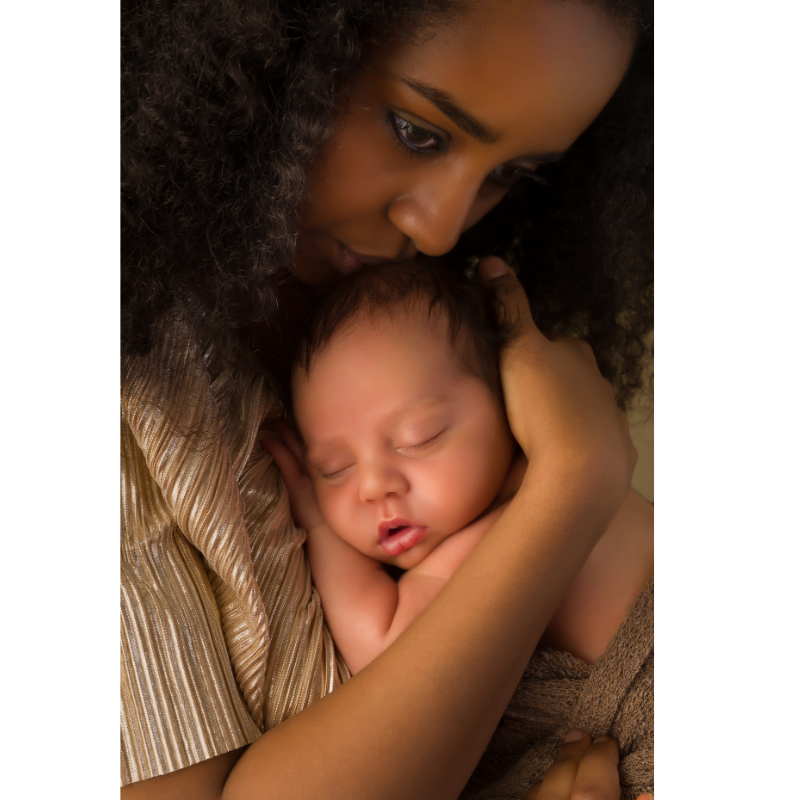
There is a moment almost every new parent remembers, and it isn’t birth. Birth itself often becomes surprisingly hazy. You remember flashes: a sound, a sentence someone said, a hand you held, the feeling of relief when the baby cried.
But the body has a way of forgetting the physical intensity of giving birth. Even though it’s hard to imagine, within days and weeks, much of the discomfort fades from memory.
The moment that stays clear is this: the first night at home after coming back from the hospital.
You walk back into your house and everything looks exactly the same as you left it. But nothing feels the same. Somewhere in the existence of your home is a person who was not there just a few days ago. This is the moment when you realize that even though at first glance nothing appears different, everything has changed.
Sure, there is the obvious - half unpacked hospital bag and a car seat by the door. There are no nurses coming in to check on the baby. And although that might be a welcome change from the busy days at the hospital, it’s also unsettling. There is no one coming when you press the button to answer your questions, reassures you that everything is alright, or gives you what you need.
Things That Shift
Once at home, it feels like things change on tectonic level. One of them is love.
After the birth of a baby, some parents experience the deepest feeling of love they’ve ever known. This might be the first time you realize your own capacity to love another human being. Others experience it as watchfulness and a strong need to protect their baby physically.
And then, there is a realization that things are now real. There is an overwhelming sense of responsibility - someone’s entire life, health, and wellbeing are now in your hands.
This could show up as hypervigilance - a kind of alertness you haven’t experienced before. You listen to every sound that baby makes. You watch their breathing. You are constantly thinking if they’re hungry, tired, uncomfortable, overstimulated, understimulated, too warm, too cold, or something you don’t know yet how to recognize.
You quickly realize that all the focus before your baby’s birth was on preparing you for birth itself. What you were not prepared for is parenting disorientation.
The Part of Parenthood We Don’t Prepare For
During pregnancy you did a lot of important things. You attended appointments and took the vitamins. You did your research on the best pediatrician in the area. You washed tiny clothes, and learned about labor, feeding, and swaddling.
And all of that matters.
But almost none of it prepares you for the impact when your brain realizes that you are alone with a human who completely depends on you. Your baby is truly yours to understand and take care of now.
Yesterday you were a person expecting a baby and imagining how your life would be after birth. Today someone’s whole survival depends on you recognizing the tiniest cues you’ve never learned before, all the while you’re exhausted, healing, and feeling emotionally overwhelmed.
What Actually Overwhelms Parents After Birth
The difficulty of early parenthood is not just about changing diapers and keeping up with feeding schedules - although that alone is a never ending job. It’s about building a relationship with your baby while growing into your new role, all the while carrying the full load of postpartum recovery and its demands
If the connection with the baby doesn’t feel deep right away, you might feel anxious. “What if I don’t feel what I’m supposed to feel? What if I don’t have maternal instincts and intuition? My baby deserves so much better.”
You probably won’t share these new thoughts or feelings with anyone. Many new parents don’t. Instead, you carry it with you like a heavy load, and make it personal.
But what you are actually experiencing might be something very predictable - a whiplash of becoming a parent.
Your brain is trying to form an emotional bond, learn cues, develop intuition, and grow into this new identity as a parent all at once after birth. No wonder that it might feel like you failed to truly get ready.
This is not because of lack of love. It is because of lack of orientation and preparation. You are meeting a stranger at the exact same moment you become completely responsible for them.
That is a massive emotional and physiological load for a human nervous system to carry overnight.
Why the First Days Feel So Intense
The first days after birth are not just physically intense. They are emotionally, mentally, and spiritually intense.
Your brain is searching for patterns in someone you haven’t met before. Every cry feels urgent because you don’t yet know its meaning. Every silence is concerning because you don’t yet know what calm looks like for this baby.
On any giving day outside of postpartum, relationships form gradually. You meet someone new, you notice how they react, what calms them, how they communicate, what they like and don’t like… But after birth, you are expected to know all of that instantly.
What Changes When Relationship Begins Before Birth
When you begin to pay attention to your baby before birth, learn their rhythms and sense their emerging personality instead of waiting until you hold them, you gradually become familiar with them - and yourself in this new role. This intention and interaction helps you begin noticing their patterns, rhythms, responses, and preferences while they are still growing within. You recognize movements not as random sensations, but as communication. You get to know the essence of them. Over time, they become psychologically real to you long before they are in your arms.
When you start talking to them and including them in your day-to-day life as if they are already here, they become a real part of the family early on. Your brain starts mapping a relationship even before birth.
And when your baby arrives, you are not meeting someone entirely new; instead, you are continuing something that has already begun. Birth stops feeling like an introduction and starts feeling like recognition.
There is no doubt that you’ll still get tired and have difficult days and nights. You will still need support. But you will not feel disoriented.
Many parents who take time to create deep bonds with their babies before birth later say: “We still had hard days, but we just knew what to do. We figured it out.”
This Is What Prenatal Bonding Is
The time you take to bond with your baby before birth is often misunderstood as a nice activity, an emotional exercise, or something ‘extra’ for very intentional and hippy parents. But it is none of those. The time you spend ‘hanging out’ with the baby lays the groundwork for your relationship with them.
Right now, our culture assumes that almost all relational development begins after. Parents are told they will bond, learn cues, and become confident later - with practice and the baby’s physical presence. We assure parents that the majority of emotions and insecurities they experience before birth and in those early days are passing, and that with time they’ll learn to navigate them.
But, we can shortcut the unknown.
Prenatal Bonding Changes The Timing
Instead of birth carrying the entire emotional load of becoming a parent, the relationship can begin during pregnancy. The nervous system has time to adapt earlier. Instincts and confidence start developing sooner.
You don’t give birth and meet your baby at the same time; you begin becoming a parent weeks and months before. That sense of recognition—“Hey, I know you!” at birth is real.
This is why prenatal bonding is foundational care, not something extra.
Just as we don’t wait until after birth to support a baby’s physical development, we care for our health and follow medical guidance during pregnancy, we don’t have to wait to begin building the relationship either.
What May Be Different
Parents who enter birth already knowing their baby often describe feeling lighter as they navigate those vulnerable and confusing early days. They feel less stressed when the baby cries, have a clearer sense of their baby’s needs - and their own. They feel more confident in themselves as parents, and often describe their babies as more mellow. Even research is beginning to catch up to the idea that time spent with baby before them being born is making things easier postpartum.
And this is not because parenting magically becomes easier - even on the best days, it can be challenging. It’s because they are not starting from zero. They already know their baby in some capacity. And just as important, they’ve learned to trust their own perception and intuition sooner. They are not guessing all the time.
This is how a typical night might look without that early connection:
It’s 2:17 a.m. The house is completely quiet. You’re holding your baby, who is awake when you desperately want to sleep. You search your memory for instructions you were given at the hospital - What was it that the nurse said I should do if this happens?? - but none of it quite fits this moment.
You know nothing is technically wrong, but within you feel rattled. Your nervous system stays on high alert. Even when your baby finally sleeps, you don’t fully rest. Your mind keeps scanning: ‘Am I missing something?’
That is what disorientation feels like.
Now imagine that same scenario after you’ve spent time getting to know your baby during pregnancy and strengthening your intuition and confidence.
You still wake up at night. You’re still tired. You still have moments of uncertainty. But something is different. When your baby cries, your body responds with attention rather than alarm. You begin noticing patterns sooner. You recognize certain movements and sounds as clear signals. You find yourself saying, ‘I know exactly what you need.’ And often, you’re right, and much earlier than you expected.
You are learning, but you are not blindly or desperately guessing. You may still check their breathing, but out of care rather than panic. You still ask questions, but now from curiosity rather than fear and desperation. You don’t feel instantly confident; instead, you feel clear-headed enough to keep going and trust yourself.
That is orientation.
The nights are not easier because babies sleep differently - although many do. They feel different because you are no longer alone with an unknown person who is stressed out and crying uncontrollably.
The Real Outcome
Before intentional bonding we think that birth creates a parent. After it, the connection that has already begun shapes you into one.
At birth, your baby is not a stranger placed in your arms. You are two familiar beings continuing a relationship that has already started.
You still have to learn and grow. You will still make mistakes. And you will need rest, help, and reassurance. But you are not dropped into parenthood without a map. Those early days don’t feel like you’ve been completely blindsided.
For many parents, that one difference changes the experience of the first few weeks - and the confidence they carry into the years that follow far more than they ever expected.
If you are pregnant right now, start involving your baby in your life. Pay attention to their kicks and movements. Read. Sing. Talk to them. Say hello. Tell them about your day. Let them be part of your life now, not just after birth.
You can also choose to really focus on getting to know your baby during pregnancy by working 1:1 with a Prenatal Bonding BA facilitator or in a group setting with Pregnancy Dialogues.
Begin the relationship before you meet face-to-face. You are at the very beginning of something real, and real relationships are allowed to start slowly.